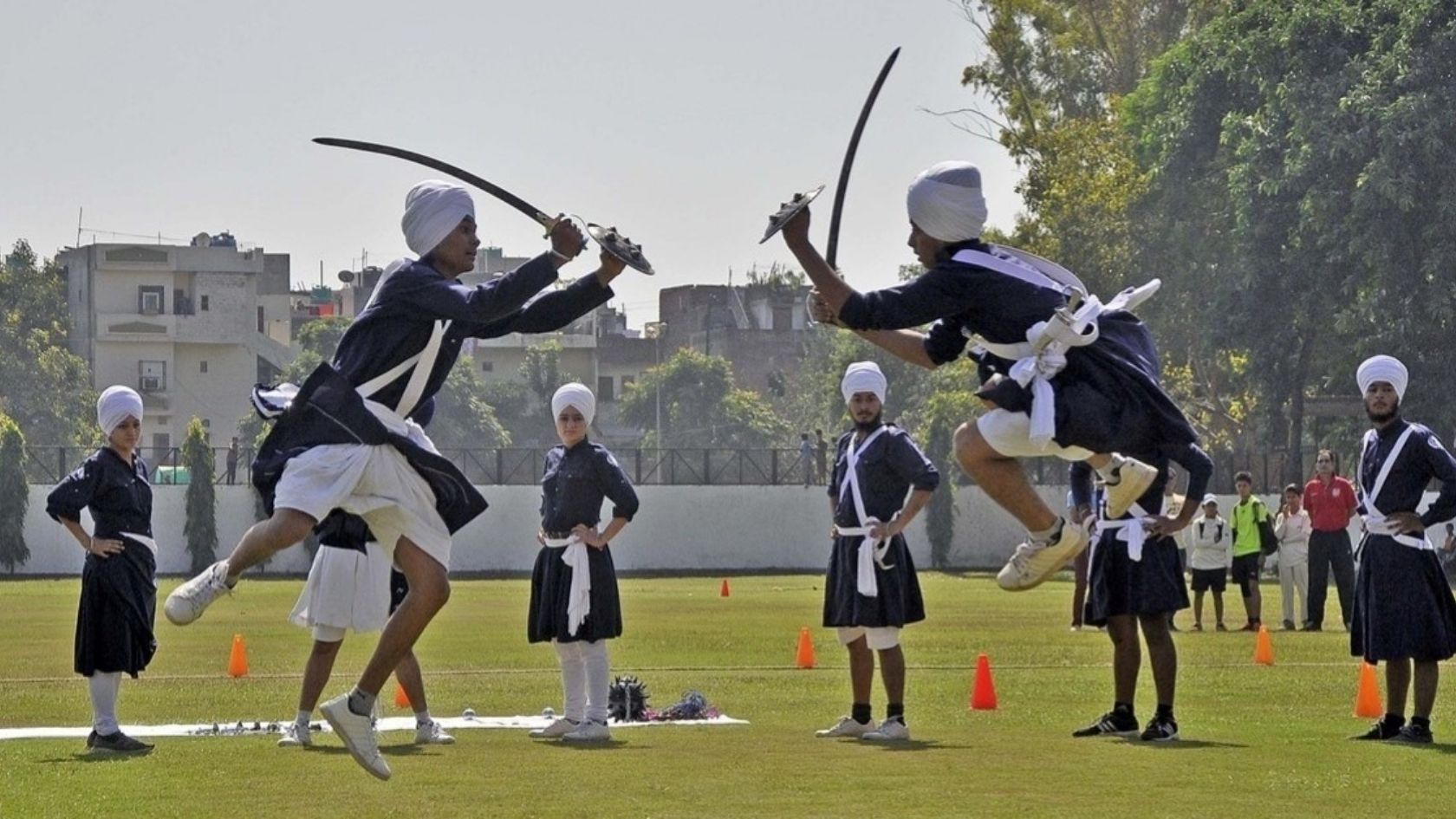
Gatka, a traditional Sikh martial art from Punjab, India and Pakistan, focuses on stick-fighting (gatkabazi) with wooden sticks simulating swords. Rooted in the 15th-century Shastar Vidya system, it promotes discipline, defense, and cultural pride. Governed by the International Gatka Federation (IGF) since 1982, Gatka is practiced in akharas (arenas) worldwide, often during festivals like Hola Mohalla. In India, Gatka is thriving, with over 50,000 practitioners, and the 2025 World Gatka Cup in Amritsar drawing international teams.
History
Gatka emerged in the 15th century as a subset of Shastar Vidya, the comprehensive Sikh martial system taught by the Sikh Gurus. Originally a full-contact combat style, it adapted sword techniques to wooden sticks after British bans in the mid-19th century following the Anglo-Sikh Wars. Revived in the 20th century, it became a cultural symbol of Sikh resilience. The IGF, founded in 1982 and formalized in 1987, organized the first World Gatka Championship in 1987. It influenced British commando training (Defendu system) during WWII.
India’s Gatka revival began in the 1970s, with the Punjab Gatka Association (PGA) formed in 1980. The 2024 National Gatka Championship in Ludhiana saw 1,200+ participants.
Methodology
Gatka emphasizes fluid, circular movements with a 91-107cm wooden stick (lathi) and a 23cm round leather shield (phari). Training progresses from basic strikes to advanced sparring, promoting miri-piri (temporal-spiritual balance). Key principles:
- Footwork and Stances: Nimble steps for evasion and attack.
- Strikes: Circular swings mimicking sword arcs, focusing on power and precision.
- Defense: Shield blocks and stick parries; full-contact allowed in traditional forms.
- Sparring: Khel (game) matches simulate battle, with no protective gear in competitive play.
India’s PGA teaches in 300+ akharas, with Ludhiana’s 2024 clinics reaching 2,000 youth.
Weapons
- Lathi: Wooden stick, 91-107cm, 1.27cm thick, wrapped with colored threads; simulates a sword.
- Phari: 23cm round shield, filled with cotton/grass for hand protection.
- Other: Kirpan (dagger), talwar (sword), chakkar (throwing disc), khandi (battle axe), barcha (spear), teer-kamaan (bow).
India’s 2025 National Gatka Cup in Amritsar will showcase lathi-phari duels.
Competition
- World Gatka Championship: Biennial since 1987; India has won 5 men’s titles.
- National Championships: Annual; 2024 Ludhiana event featured 12 categories.
- Hola Mohalla Festival: Annual Sikh martial display; 2025 Amritsar event expects 50,000+ spectators.
- Olympic Recognition: IGF pushes for 2028 Olympics; included in Khelo India Youth Games 2021.
India’s Punjab team won the 2023 World Cup; 2025 Amritsar event aims for 20 nations.
Cultural Significance
Gatka embodies Sikh values of courage and equality, performed at gurdwaras and festivals. It influenced British WWII training (Fairbairn-Sykes Defendu) and appears in media (Murderball documentary, Friday Night Lights). In Punjab, it’s a symbol of resilience post-19th-century bans.
India’s 2024 Hola Mohalla in Anandpur Sahib drew 100,000+ for Gatka displays.
Table of Gatka Milestones and India’s Role
| Milestone | Global Description | India Relevance |
|---|---|---|
| Origins | 15th century Punjab; Shastar Vidya subset. | PGA formed 1980; 300+ akharas. |
| British Ban | Mid-19th century post-Anglo-Sikh Wars. | Underground preservation; 1970s revival. |
| IGF Formation | 1982; first World Cup 1987. | India hosts 2025 World Cup in Amritsar. |
| Olympic Push | IGF aims for 2028; Khelo India 2021 inclusion. | Punjab team won 2023 World Cup; 2024 Nationals 1,200+ players. |
| Cultural Festivals | Hola Mohalla displays. | 2024 Anandpur Sahib event drew 100,000+. |
Gatka’s fusion of martial prowess and cultural heritage endures. India’s PGA, with talents like over 50,000 practitioners, aims for 2026 Olympic exhibition. Visit gatka.org or pga.in for more.