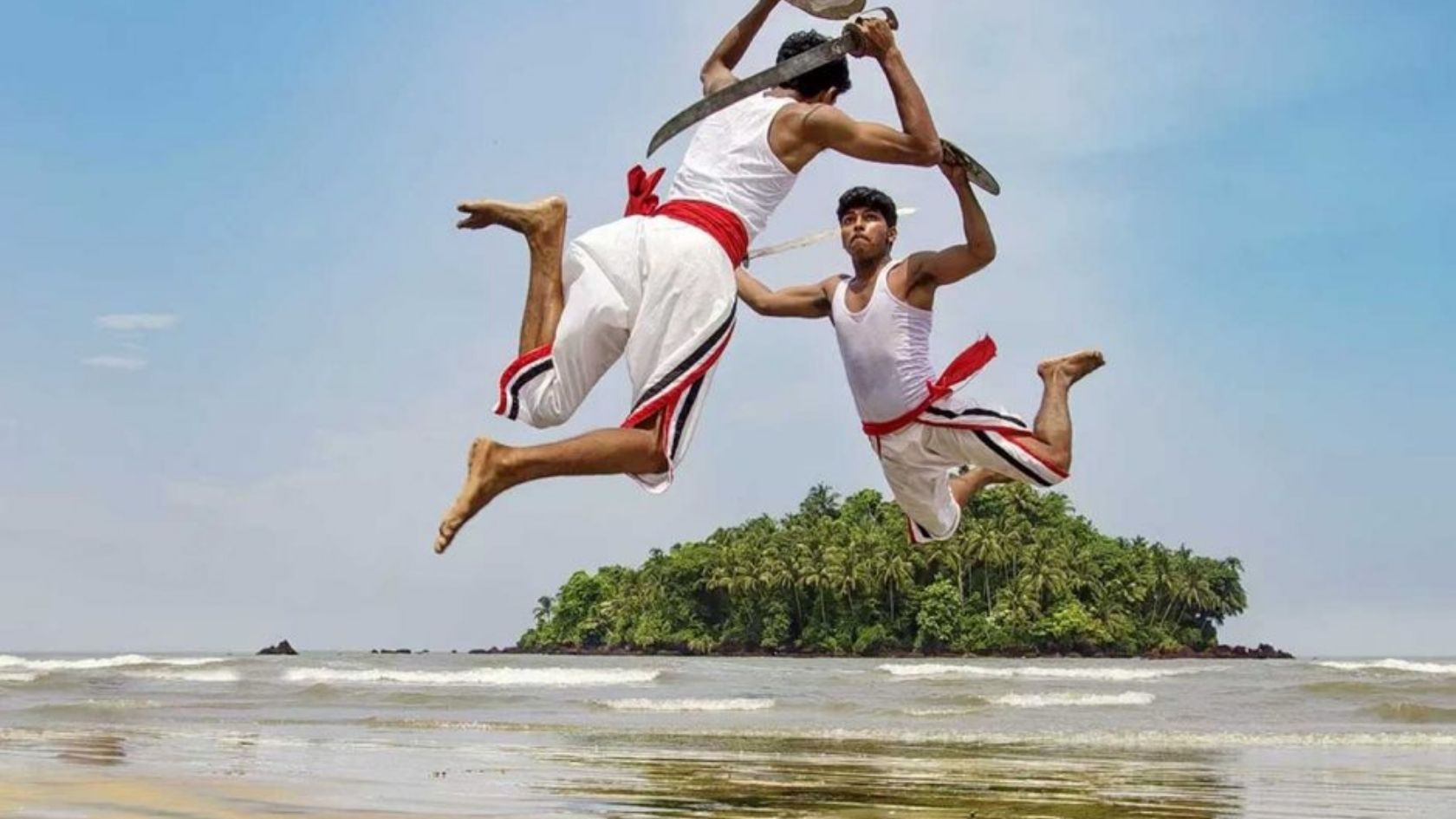
Kalaripayattu, often called Kalari, is a multifaceted Indian martial art originating in Kerala around the 3rd century BCE. Known as the “practice in the arts of the battlefield,” it combines strikes, kicks, grappling, weapon-based techniques, and healing methods, rooted in Kerala’s warrior traditions. Governed by bodies like the Indian Kalaripayattu Federation (IKF), it emphasizes physical and spiritual discipline. In India, Kalaripayattu is experiencing a revival, with over 500 kalaris (training grounds) in Kerala and 10,000+ practitioners, targeting global recognition by 2026.
Etymology and Mythology
The term Kalaripayattu derives from Malayalam: kalari (battleground or training ground) and payattu (martial arts training), translating to “practice in the arts of the battlefield.” Some link kalari to Khaloorika, a goddess in Shaktism revered in Kalaripayattu. Mythologically, Parashurama, the sixth avatar of Vishnu, is credited with founding it, teaching 21 gurus across 108 kalaris after raising Kerala from the ocean. Another legend ties Ayyappa, a Kerala war deity, to training at Cheerappanchira Kalari.
India’s 2024 Kalaripayattu Festival in Thiruvananthapuram featured rituals honoring Parashurama, drawing 3,000+ attendees.
History
- Early Roots (600 BCE–300 CE): Evolving from Sangam-era Dravidian combat and Dhanur Vedic traditions, warriors trained in spear (vel), sword (val), shield (kedaham), and bow (vil ambu).
- Late Medieval (1100–1500 CE): Formalized during the Chera-Chola wars, Kalaripayattu became mandatory for Kerala’s youth, especially Nairs and Thiyyars, in village kalaris with Bhagavathy as the presiding deity. It fueled ankam (group duels) and poithu (individual duels), with up to 12 years of preparation.
- Colonial Decline (1500–1900 CE): European accounts (e.g., Duarte Barbosa, 16th century) praised Nair and Thiyyar training. The British banned it in 1804 post-Kottayathu War, but gurus like Kottackkal Kanaran Gurukkal preserved it secretly.
- Modern Resurgence (20th–21st Century): Revived in the 1920s in Thalassery, Kalaripayattu spread through CVN Kalaris and Chirakkal T. Sreedharan Nair’s books, including Kalaripayattu (1937) and Kalarippayattu – A Complete Guide. In 2017, Sri Meenakshi Amma received the Padma Shri for preservation efforts.
India’s Kalaripayattu Academy, opened in 2021 in Thiruvananthapuram, trains 100+ students under Sri Meenakshi Amma, with 2024 enrollment up 25%.
Practice and Techniques
Kalaripayattu follows the guru-shishya tradition, emphasizing observation, adaptation, and evolution. Training begins with weapons (unlike most martial arts) and progresses to unarmed combat.
- Chuvadu and Vadivu: Chuvadu (steps) and vadivu (animal-inspired stances, e.g., elephant, lion) form the core, with eight primary postures varying by style.
- Meypayattu: Conditioning exercises for flexibility and strength, followed by kolthari (wooden weapons), angathari (metal weapons), and verum kai (barehanded).
- Marmashastram: Striking 107 vital points (marmam), with 64 lethal; taught cautiously to prevent misuse, rooted in Ayurveda and Siddha medicine.
- Massage (Uzhichil): Katcha thirumal enhances flexibility; herbal oil massages treat injuries, common during Kerala’s monsoon.
India’s 2024 National Kalaripayattu Championship in Kozhikode saw 600+ participants, with women comprising 40%.
Weaponry
Kalaripayattu uses light armor for mobility, with weapons including:
- Urumi: Flexible, whip-like sword.
- Sword and Shield: For close combat.
- Spear and Dagger: For thrusting and precision.
- Gada: Heavy mace for strength training.
- Bow and Arrow: Rarely taught today.
India’s kalaris produce urumis locally, with 2025 plans for export to martial arts academies globally.
Styles
- Northern (Vadakkan Kalari): Practiced in Malabar; emphasizes flexibility, jumps, and elegant movements (Meyy kannavanam – “make the body an eye”). Training progresses from meypayattu to weapons (dagger, sword, spear).
- Southern (Thekkan Kalari): Near Kanyakumari; focuses on hard-impact, hand-to-hand combat, influenced by Tamil Varma Adi. Starts with chuvadu and sparring.
- Central (Madhya Kalari): Less common, blends both styles.
- Regional (e.g., Tulunadan Kalari): Rare, restricted to Tulu Nadu.
India’s Northern style dominates, with 70% of kalaris in Malabar; Southern style grows near Tamil Nadu borders.
Training Ground (Kalari)
Kalaris are built per Vastu Shastra, with red sand floors mixed with medicinal herbs. Key features:
- Poothara: Seven-tiered platform (or nine), symbolizing chakras, topped with a lotus-shaped kumbha for Bhagavathy.
- Ganapatithara: Honors Ganapati with an otta (tusk-shaped stick).
- Guruthara: Commemorates gurus with paduka (footwear).
- Rituals: Students apply tilak from kalari soil, saluting deities before training.
India’s 2021 Kalaripayattu Academy features a model kalari, visited by 5,000+ tourists in 2024.
Governing Bodies
- Indian Kalaripayattu Federation (IKF): Thiruvananthapuram; recognized by the Ministry of Youth Affairs and Sports (2015).
- Kalaripayattu Federation of India (KFI): Kozhikode; affiliated with the Indian Olympic Association.
- Kerala Kalaripayattu Association (KKA): Recognized by the Kerala State Sports Council.
IKF’s 2024 national seminar trained 200+ gurus, boosting standardization.
Cultural Influence
Kalaripayattu influences Kathakali and Mohiniyattam, with shared stances and movements. Non-Keralite dancers like Vasundhara Doraswamy (Bharatanatyam) incorporate it. It appears in films (Urumi, Padmaavat), animations (Little Kalari Warriors), and games (Soulcalibur, Tekken).
India’s 2025 Kochi-Muziris Biennale featured Kalaripayattu performances, attracting 10,000+ viewers.
Table of Kalaripayattu Milestones and India’s Role
| Milestone | Global Description | India Relevance |
|---|---|---|
| Origins | 3rd century BCE, Kerala; Parashurama legend. | Practiced in 500+ kalaris; 2024 festival drew 3,000+. |
| Medieval Peak | 1100–1500 CE; mandatory for youth. | Ankam/poithu duels; Vadakkan Pattukal ballads. |
| Colonial Decline | 1804 British ban post-Kottayathu War. | Secret training by Kanaran Gurukkal; CVN Kalaris revived it. |
| Modern Resurgence | 1920s Thalassery; Sreedharan Nair’s books. | 2021 Kalaripayattu Academy; 10,000+ practitioners in 2024. |
| Cultural Impact | Influences Kathakali, global media. | 2025 Biennale performances; used in Spider-Man: Across the Spider-Verse. |
Kalaripayattu’s blend of combat, healing, and spirituality endures. India’s IKF, with gurus like Meenakshi Amma, aims for 2026 Olympic exhibition status. Visit ikf.org.in or kerala.gov.in for more.