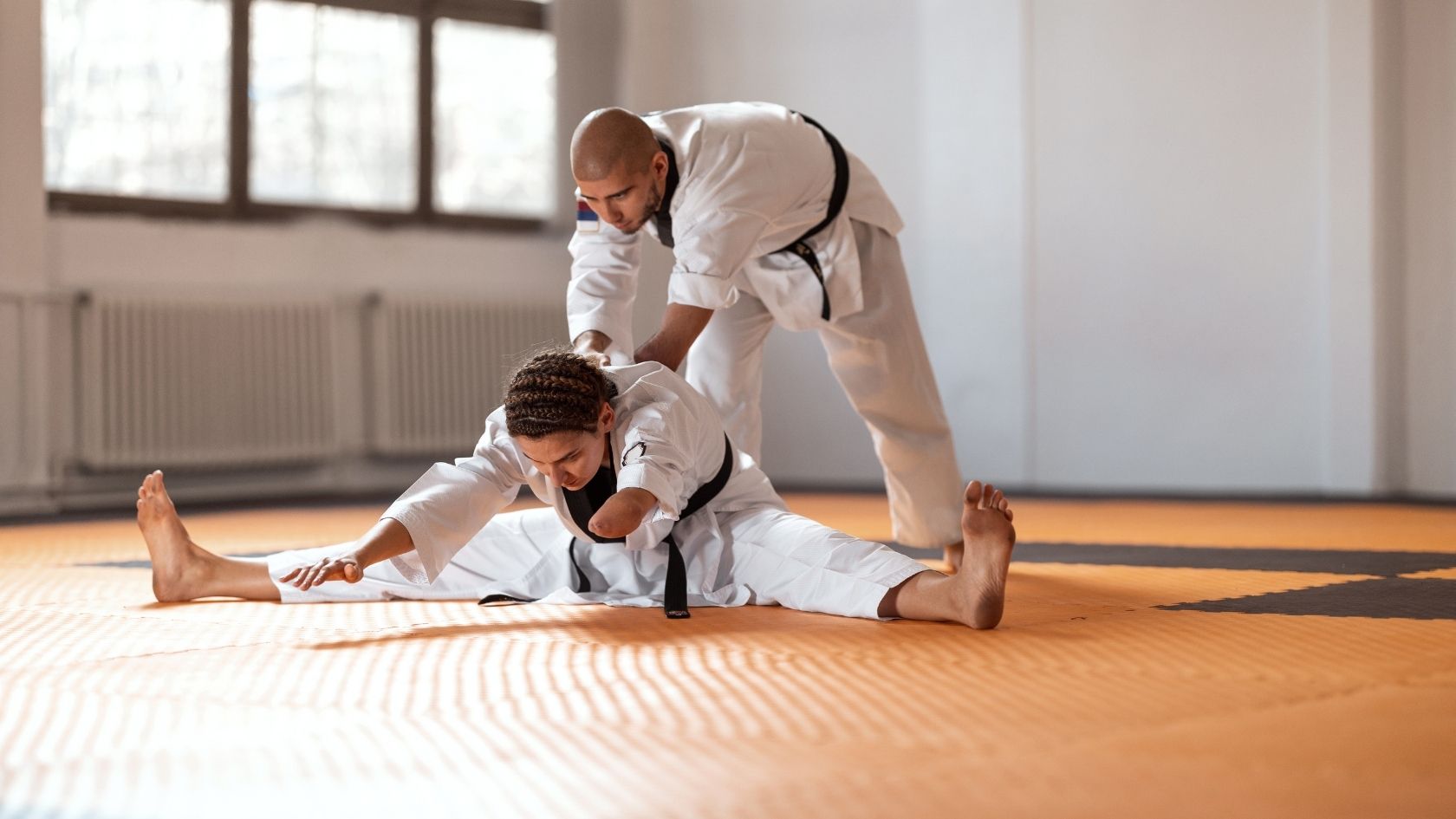
Para Taekwondo, governed by World Taekwondo (WT), is an inclusive adaptation of taekwondo for athletes with impairments, featuring kyorugi (sparring) and poomsae (forms). Debuting at the 2016 Rio Paralympics, it expanded to include all impairments by 2013, with WT as an IPC full member since 2015. As of 2025, India ranks 32nd globally with 3 medals (1 gold, 1 silver, 1 bronze) at world events, driven by athletes like Aruna Tanwar. In India, Para Taekwondo is surging, with the Para Taekwondo Association (PTAI) and Taekwondo Federation of India (TFI) training over 1,000 athletes, targeting the 2028 Paralympics.
History
Para Taekwondo originated in 2006 with WT’s Para Committee, focusing on kyorugi for amputees. The first World Championships were in 2009 in Baku, Azerbaijan. By 2013, it expanded to poomsae for neurological, intellectual, and visual impairments. IPC recognition came in 2013, with Rio 2016 as the Paralympic debut. The 2017 Tokyo 2020 confirmation solidified its status. India’s Para Taekwondo began in 2010, with PTAI formed to uplift athletes. The 2024 National Championships in Lucknow featured 500+ participants, a 20% rise from 2023.
Disciplines
- Para Kyorugi (Sparring): Modified rules—no head strikes, no punches; 3×2-minute rounds, golden point for ties. Weight classes: Men (U61kg, U75kg, +75kg); Women (U49kg, U58kg, +58kg).
- Para Poomsae (Forms): 20-120 seconds; scored on technical (4.0) and presentation (6.0). Divisions by age/gender: Junior (12-15), Under 30 (16-29), Over 30.
India excels in kyorugi, with Tanwar’s W-49kg K43 ranking #4 globally; poomsae trials for 2025 Worlds in Mumbai.
Classification
- Kyorugi: K40 (visual), K60 (deaf), P10 (visual), P20 (intellectual), P30 (physical), P50 (deaf), P60 (short stature).
- Poomsae: P10 (visual), P20 (intellectual), P30 (physical), P50 (deaf), P60 (short stature), P70 (major).
India’s TFI classifies via MIC; 2024 saw 15 new PTVI1 athletes; Tanwar (K43) leads.
Competition Format
- Kyorugi: Single-elimination/round-robin; 3×2-min rounds; 1-min rest; golden point (4th round) for ties.
- Poomsae: Single/double-elimination; 20-120 seconds; rhythm and precision judged.
- World Rankings: Points from G1-G10 events; India’s Tanwar earned 1,200 points in 2024.
India’s 2025 Dubai Open entry (G1) targets rankings; Tanwar’s #4 spot secures 2026 Worlds qualification.
Equipment
- Dobok: Protective uniforms; headgear banned in kyorugi.
- Bogus: Chest protectors; trunk strikes score 2-4 points.
- Poomsae Gear: Standard dobok; no protectors.
India’s PTAI supplies Mooto bogus; 2024 nationals used electronic scoring mats.
Major Competitions
- Paralympics: Since 2020 Tokyo; 6 kyorugi events (3 men, 3 women).
- World Championships: G-10; 2023 Baku saw Russia dominate (26 golds).
- Asian Para Games: Quadrennial; China leads; India’s Tanwar won bronze in 2022.
- National Championships: 2024 Lucknow; 500+ athletes; Uttar Pradesh won team gold.
India’s 2025 World Championships entry in Fujairah (G-10) features Tanwar; PTAI plans 2026 Asian Para Games team.
Table of Para Taekwondo Milestones and India’s Role
| Milestone | Global Description | India Relevance |
|---|---|---|
| Origins | 2006 WT Para Committee; first Worlds 2009 Baku. | PTAI formed 2010; first nationals 2014. |
| Paralympic Debut | 2020 Tokyo; 6 kyorugi events. | India debuted 2020; Tanwar’s #4 ranking. |
| Poomsae Inclusion | 2015 INAS/CPISRA Worlds; full by 2017. | India’s 2024 poomsae nationals; 200+ youth. |
| Classifications | 2014 revision: K40-K60, P10-P70. | TFI classifies 15+; Tanwar (K43) leads. |
| World Rankings | Points from G1-G10; Russia #1. | India #32 (3 medals); Tanwar’s 1,200 pts in 2024. |
Para Taekwondo’s inclusivity inspires. India’s PTAI/TFI, with Tanwar’s leadership, aims for 2028 Paralympic medals. Visit worldtaekwondo.org or parataekwondoindia.com for more.